
Art Scene
INSTALLATION ARTIST NGWATILO MAWIYOO’S LATEST WORK CONFRONTS THE FENCES OF UHURU PARK
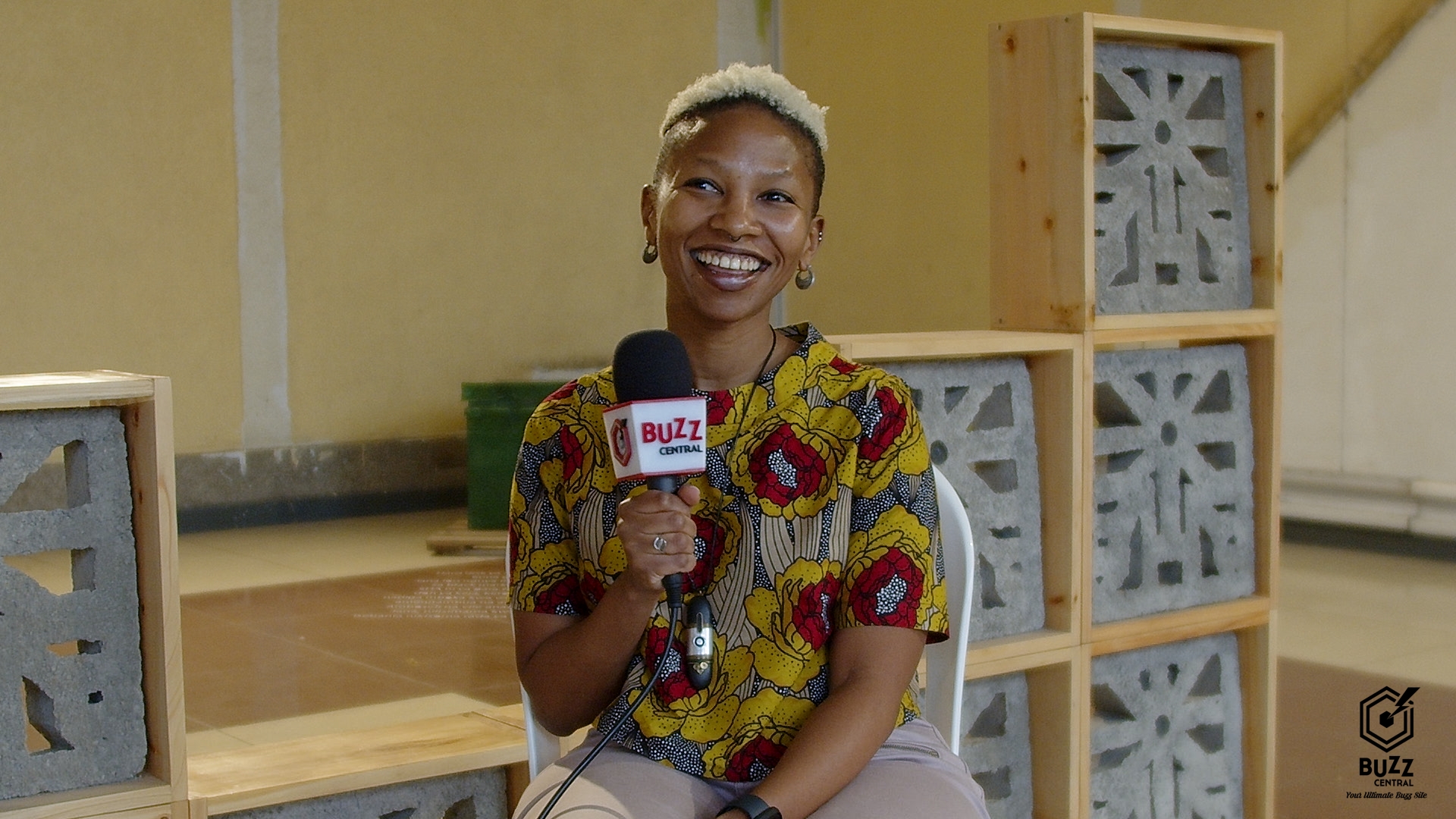
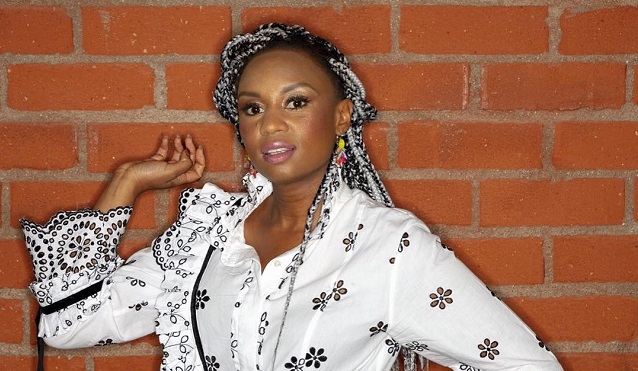
Installation artist Ngwatilo Mawiyoo, the story of a city is not found only in its grand political moments, but in the small, personal memories of its people, the Sunday afternoons spent boating, the children playing, and the simple act of taking a family photo. This belief is at the heart of her latest work, a series of installations created with collaborator Adam Yawe for the Generations and Memories exhibition at the Hazina Trade Centre.
Their project turns a thoughtful eye towards Uhuru Park, a green heart in Nairobi that has witnessed generations of change. “We have been thinking about Uhuru Park as a location and what it has meant to Nairobians, going back generations,” Mawiyoo explains. “We’re thinking as far back as we can go, just prior to the colonial interaction, through the colonial moment, and into post-colonial Kenya when the park was created.”
The project feels particularly urgent now, as the park itself undergoes changes. “It has felt a bit more urgent for us with the changes that are happening,” she says, “as we think about what we would like to happen at that site going into the future.”
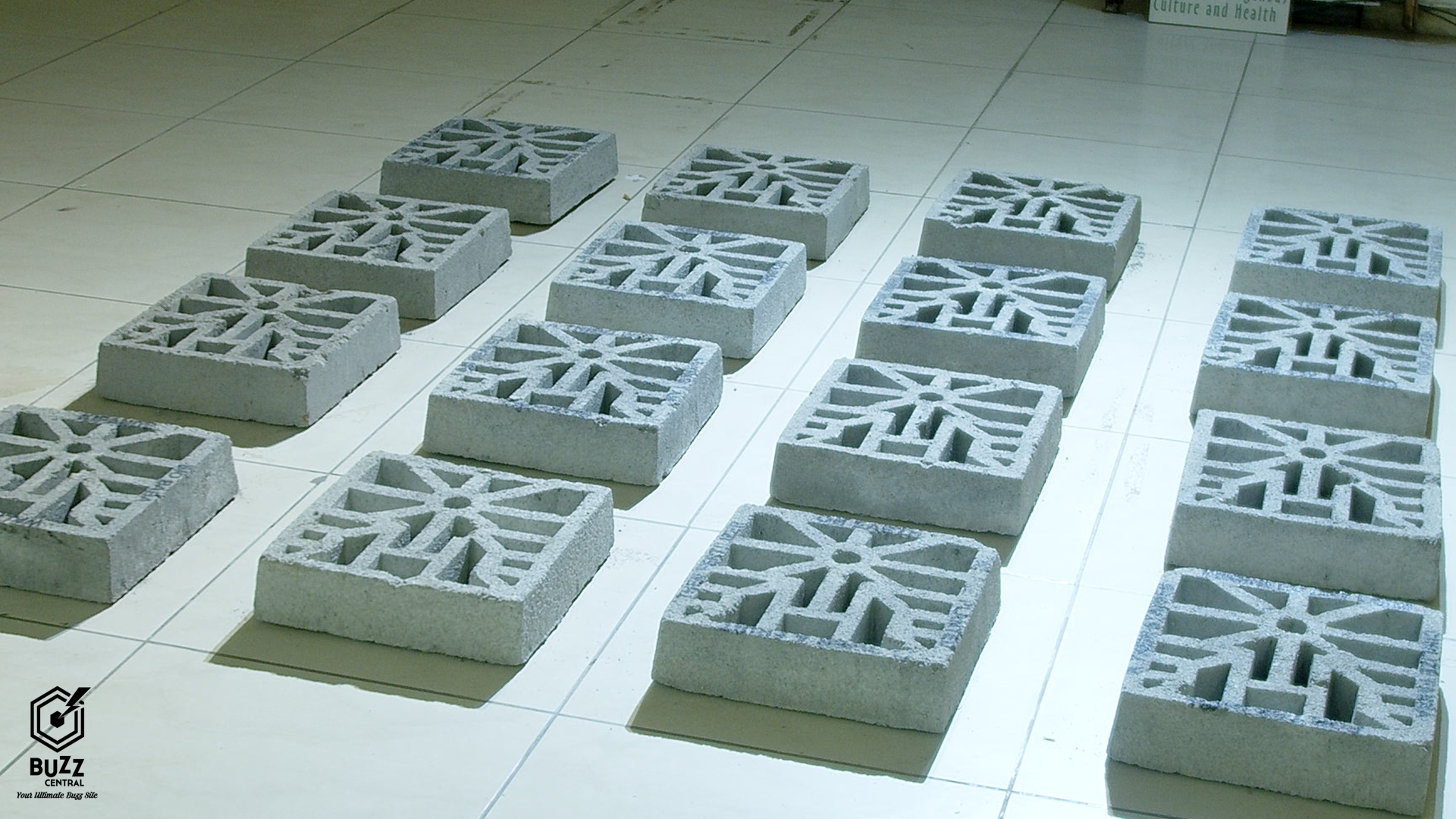
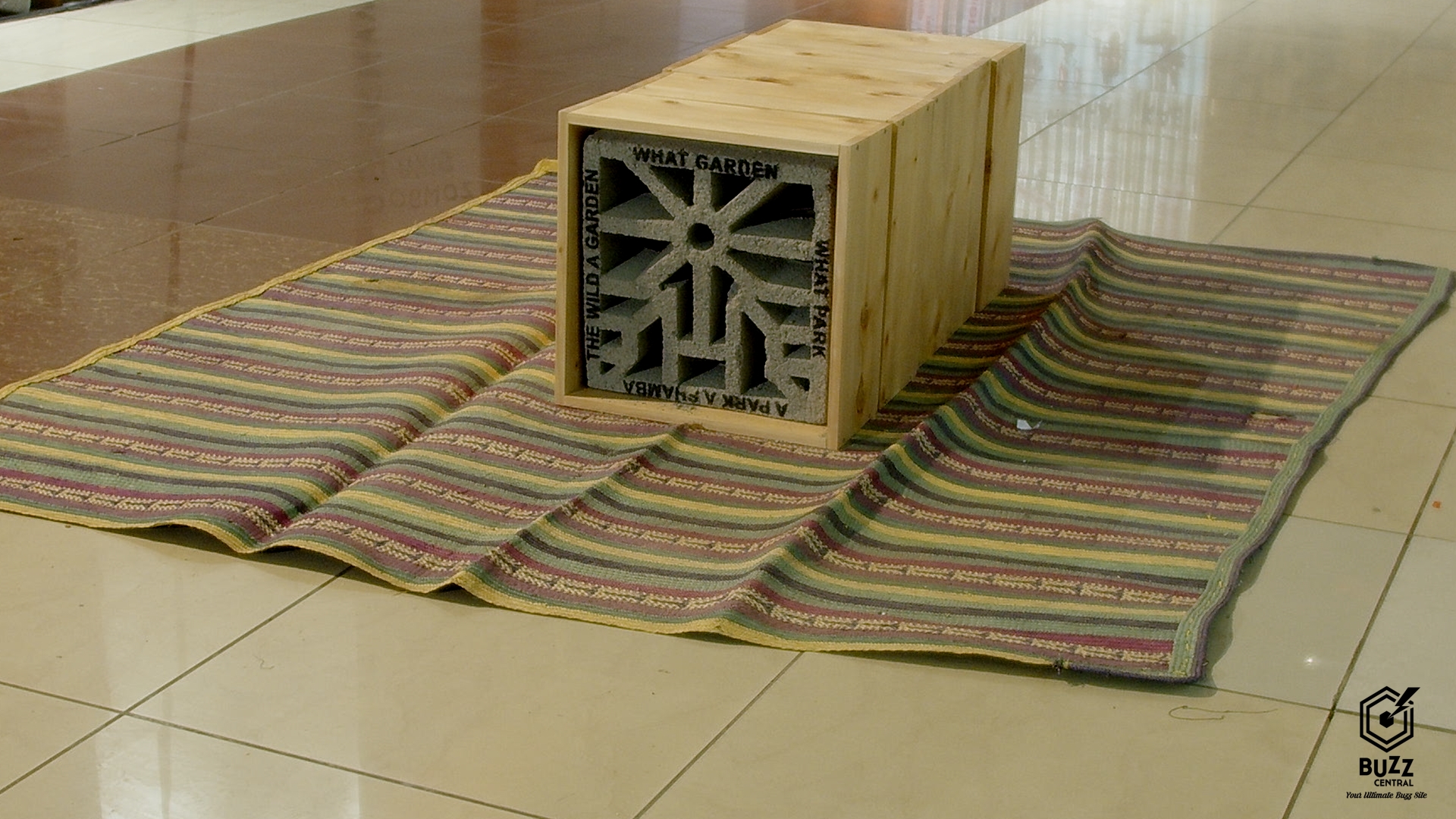
One of their central pieces is a concrete breeze block, framed by Cyprus trees. This simple object is a direct reference to the pavilions that once stood in Uhuru Park, which have since been removed. “The breeze block itself is a motif of the pavilions that were at Uhuru Park,” she notes. “We’ve been thinking about the monuments of Uhuru Park, and so this was kind of our monument.” The piece also pays tribute to the skateboarding community that once gathered there, for whom the space was vital.
The block is engraved with text on all four sides, a history in fragments. “The text itself is thinking about that history,” Mawiyoo says. “It’s thinking about that pre-colonial, colonial and present-day meaning of Uhuru Park, which for me is about green space. It’s about public space.” This theme of access is critical. She points to the current reality of the park: “If you go to Uhuru Park, you ask for your ID. Why must access to that green space be policed in that way?”
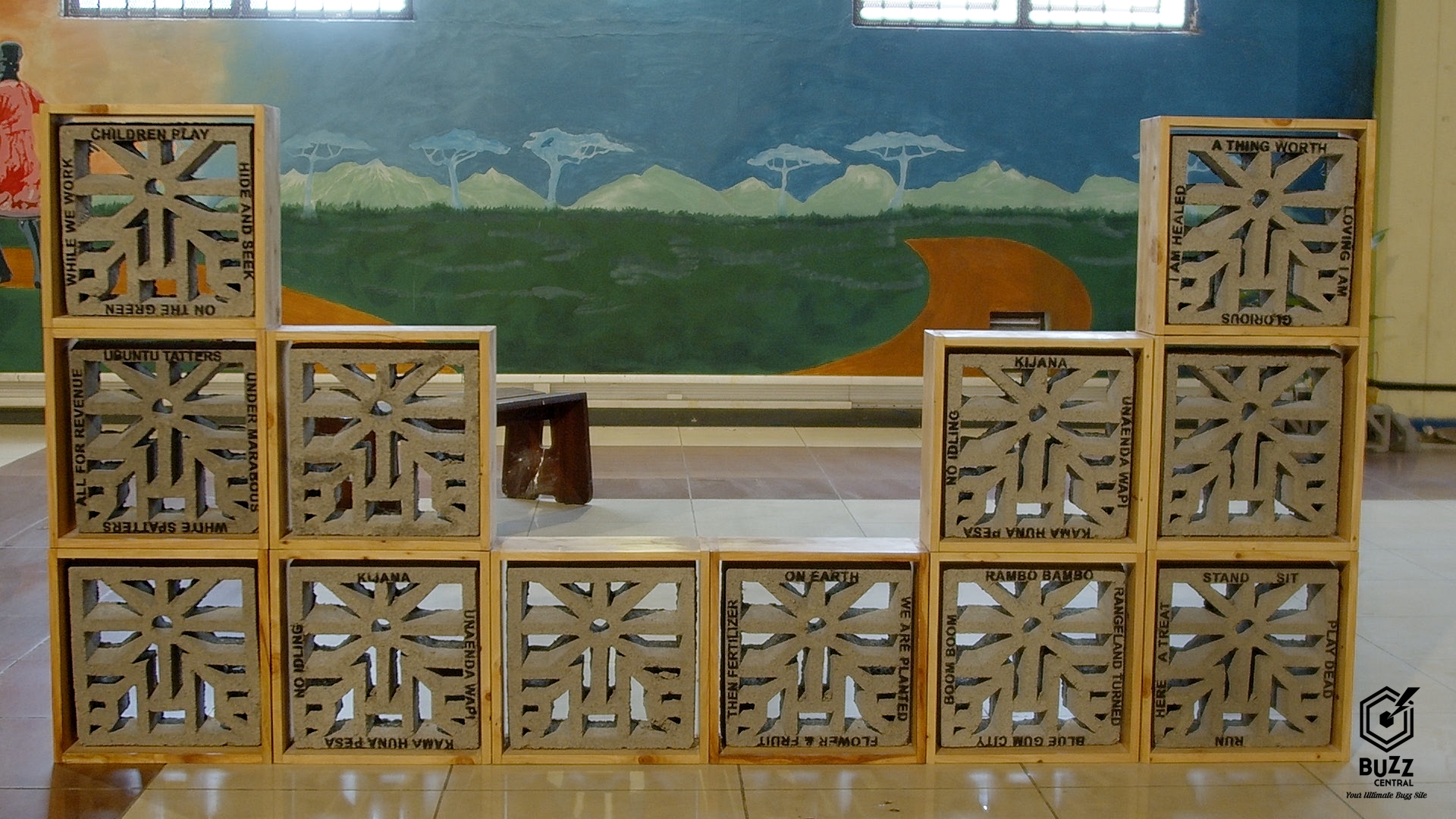
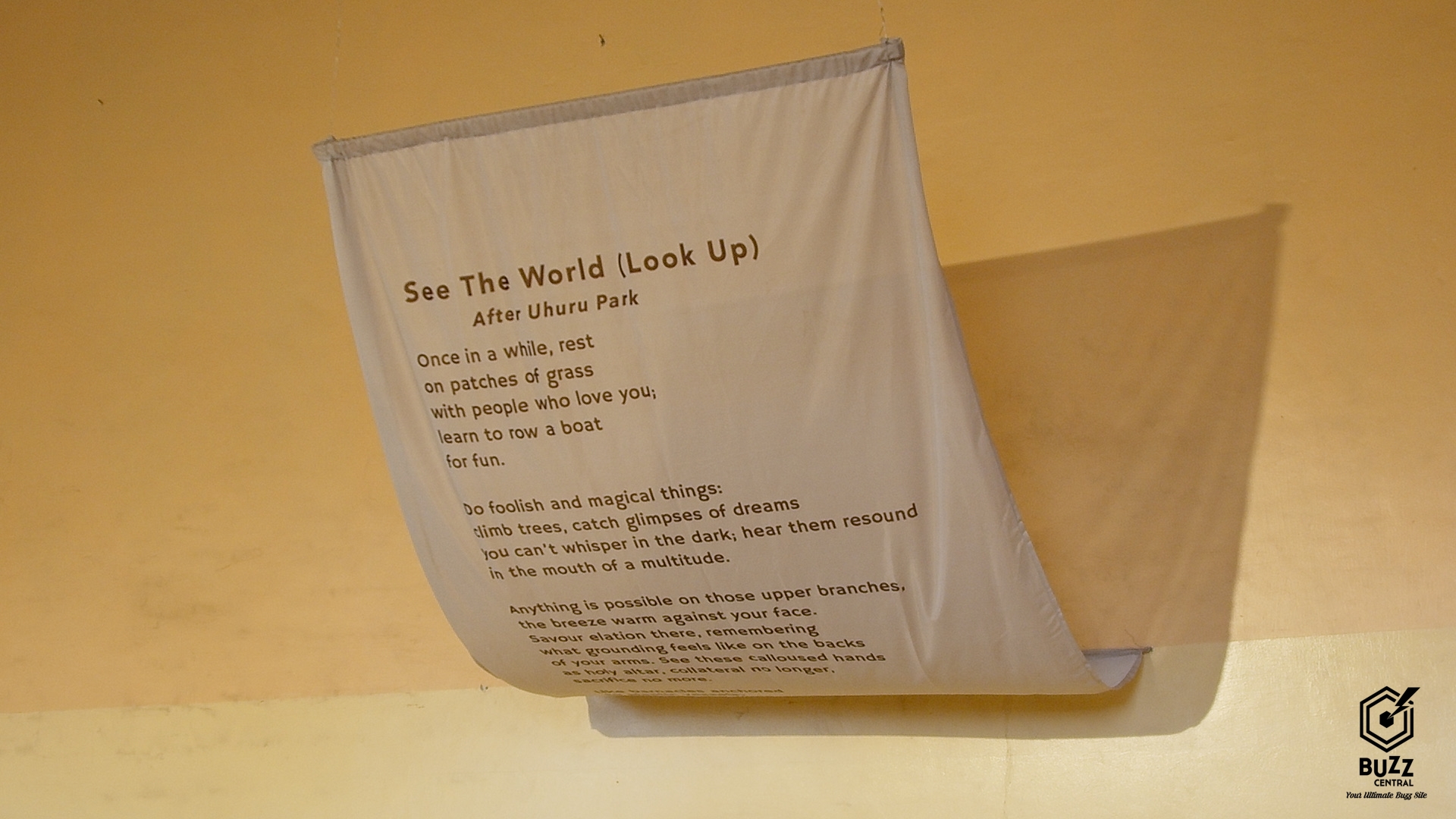
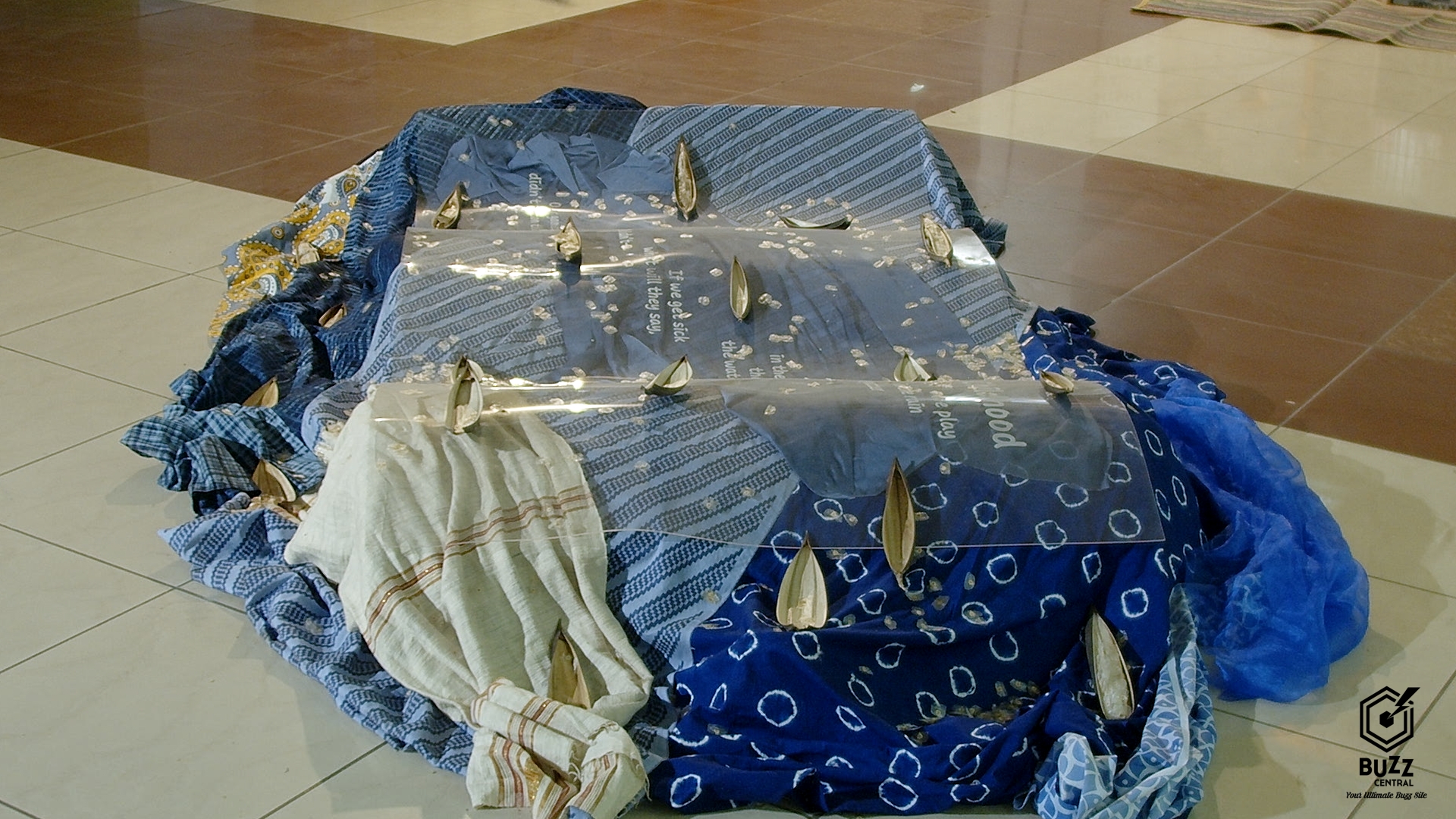
Alongside the breeze blocks, their installation includes archival images of the park from as far back as the early 1900s, showing a landscape of blue gum trees and the construction of Nyayo House. Another piece, titled “Childhood,” uses poetry on perspex and fabric alongside flame tree pods to speak of the right to play and is critical of how adults poison the environment.
For Mawiyoo, balancing the political with the personal is essential. “The personal is political,” she states. “You can talk about the constitution being promulgated at Uhuru Park, but also when we were kids, we used to take photos there on a Sunday afternoon. Those are all part of our memory of the space, and they’re also important.”
This focus on everyday life has been a constant in her work, from her first poetry collection, Blue Mother tongue, which explored her family’s history, to a project called This Kenyan Life where she lived with 10 different rural families after the post-election violence.
“My biggest takeaway was… we are really a warm people,” she reflects. “I was in the homes of strangers, and I was always safe. The way we speak about each other is the thing that divides us, but we ourselves are not.”
This spirit of expansion has propelled her own journey beyond poetry into filmmaking, a medium she embraced for its collaborative nature. “As a poet, sometimes you tend to work by yourself,” she says. “Your film is made by everyone who comes together to help you make it.”
Her short films, Joy’s Garden and the award-winning Inheritance, have travelled to international festivals, granting her the ability for her work to connect with audiences in Turkey or South Africa without her physical presence. “To watch other people see the work, and they don’t know it was me, is so special,” she says.
Her mission as an artist is to make sure these everyday stories are seen and valued. “Our stories are also part of how this country comes to be,” she says. “If we try to tell stories that don’t include the lived experience of what it is to live here, then we do our future selves a massive disservice.”
Ultimately, her work is a path toward something greater. “I want my work to forge a path to joy and freedom,” she says. “We talk about our country as a place of Uhuru [freedom]. Who is this Uhuru for? For me, part of that requires a daily practice of joy. We cannot talk about Uhuru if we cannot see our joy, our freedom, in a lived way.”
Mawiyoo’s advice to fellow artists is to stay open and keep experimenting, much as she did by moving from poetry into film and now installation art.
“Sometimes we limit ourselves by the things we dream about,” she concludes. “My invitation to other artists is to stay open to those things you hadn’t actually dreamt of, and say yes.”