Art Scene
SCULPTOR MESHACK OIRO’S QUEST TO TURN KENYA’S SCRAP METAL INTO MASTERPIECES
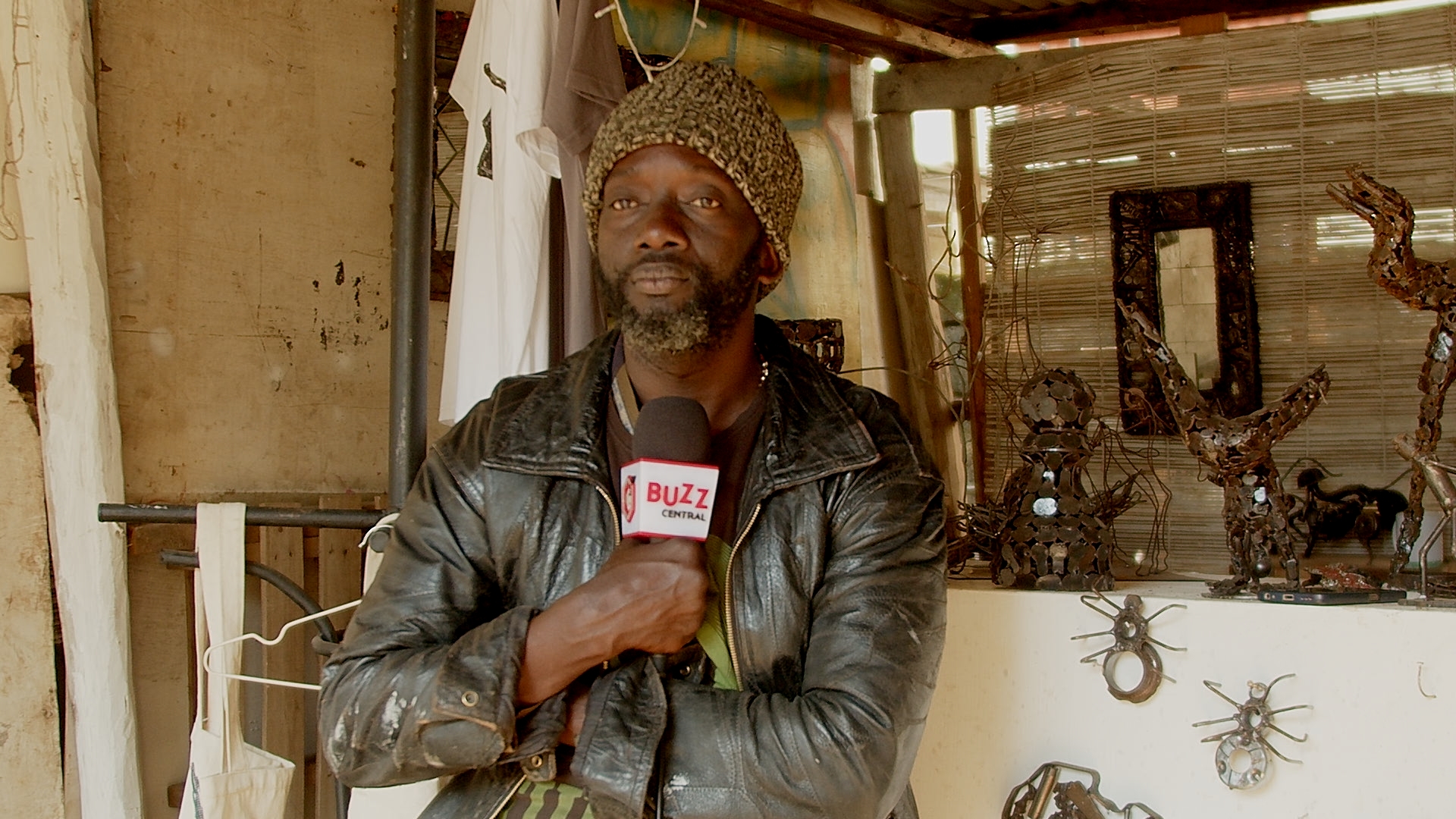
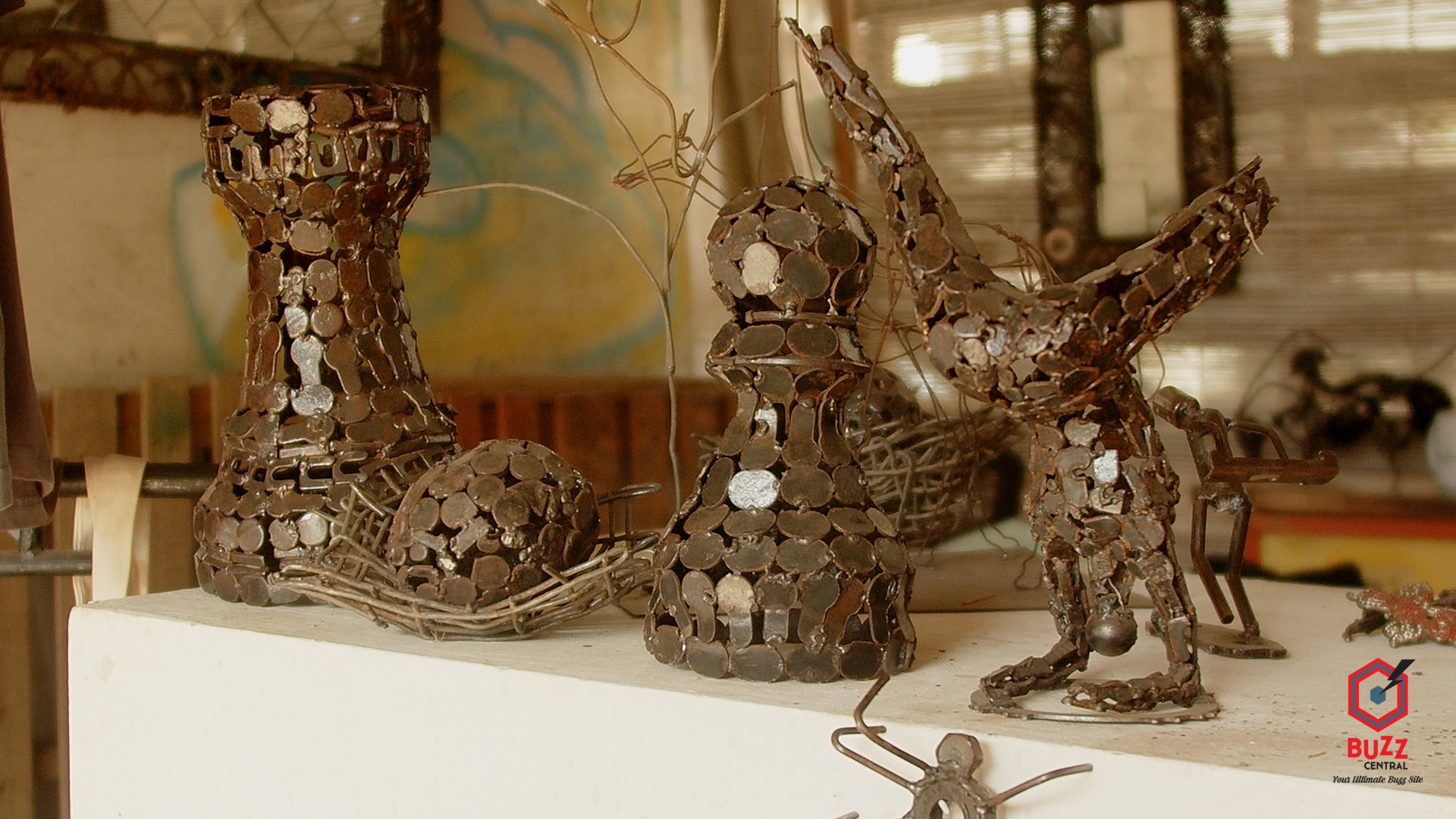
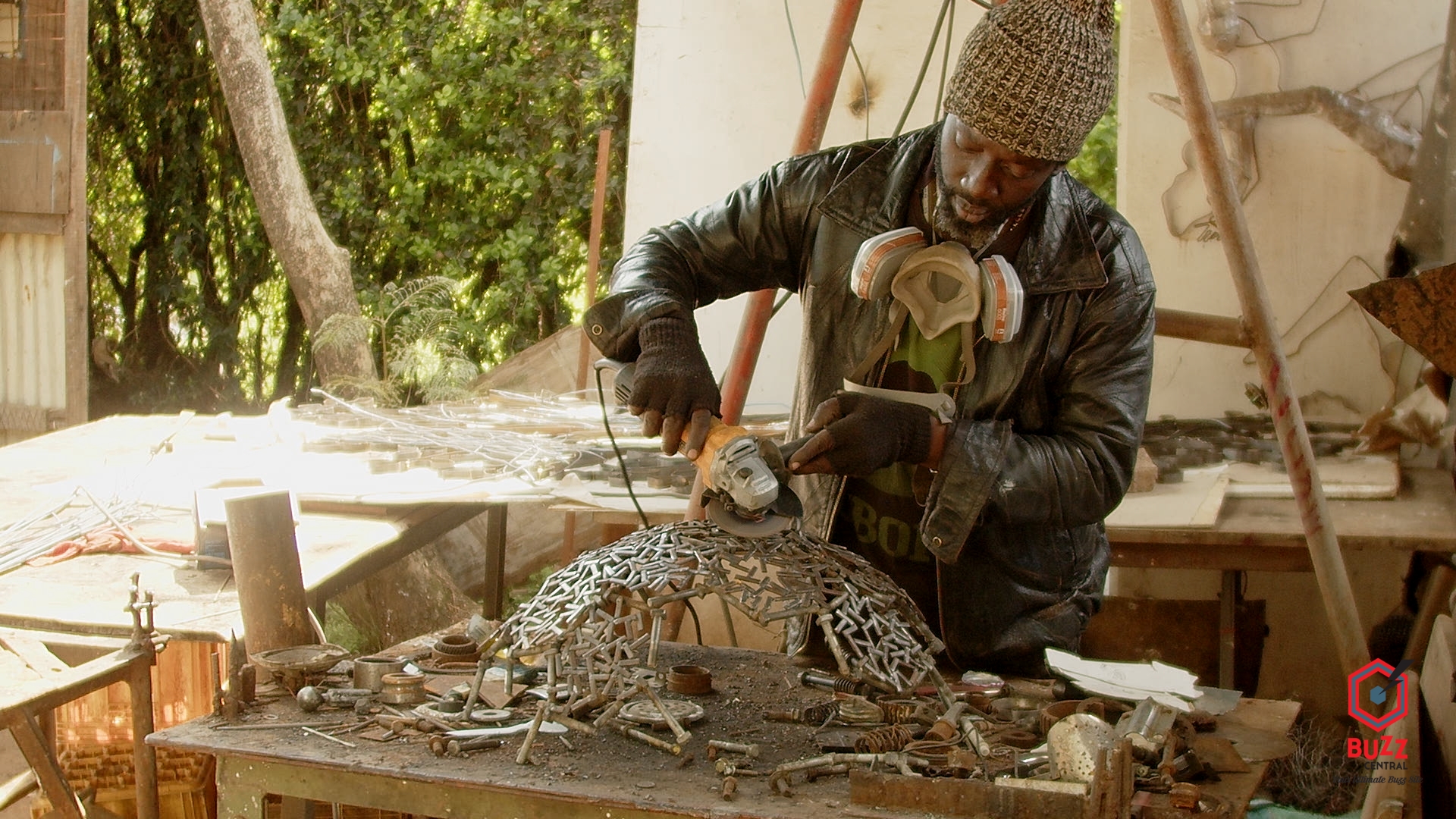
The clang of hammer on metal and the sharp hiss of a welder are the sounds of creation in Meshack Oiro’s workshop. Here, surrounded by the skeletons of old cars, discarded sheets of steel, and forgotten machine parts, the sculptor performs a kind of modern-day alchemy. He transforms the country’s waste into works of art.
“My work is majorly simple,” Oiro says with a modest smile that belies the complexity of his craft. “I visit the junkyards where I choose my materials.”
For Oiro, an artist and co-founder of Shaq Art Studios, this choice of material is intentional. Metal, often seen as cold, hard, and industrial, is the central character in his story. “Metal is mostly perceived to be a very hard material,” he explains. “But that’s not the case. In my work, there’s a fluid way that the metal drops that demystifies its hardness. I usually try to make the metal bow down to me.”
His journey to this point was not a straight line. Growing up in Mombasa in a family of artists, he was surrounded by the tourist art his uncles created from clay. Though he initially pursued computer engineering, the pull of art was too strong to ignore. “Art is something I never thought I would do as a career, but it’s something I loved,” he recalls. The formal training he later received at the Buruburu Institute of Fine Arts, combined with the challenges of life in Nairobi’s Eastlands, fused together to create his unique artistic voice.
Oiro’s process is meticulous. It begins with a sketch, which is then turned into an armature, a wireframe skeleton of the final piece. He then crafts a plaster mold around it, within which he welds the scavenged metal pieces together. The result, once the mold is broken away, is a stunning sculpture, brushed to a shine and treated to withstand the elements.
His work is a direct commentary on Kenya’s growth and its consequences. “You see how our country is polluted… by carbon dioxide coming from motorbikes, from vehicles,” he observes. “The industry is growing, which we must appreciate, but as it grows, it leaves behind traces of trash. In my way of cleaning it, I use metal that has already been discarded.”
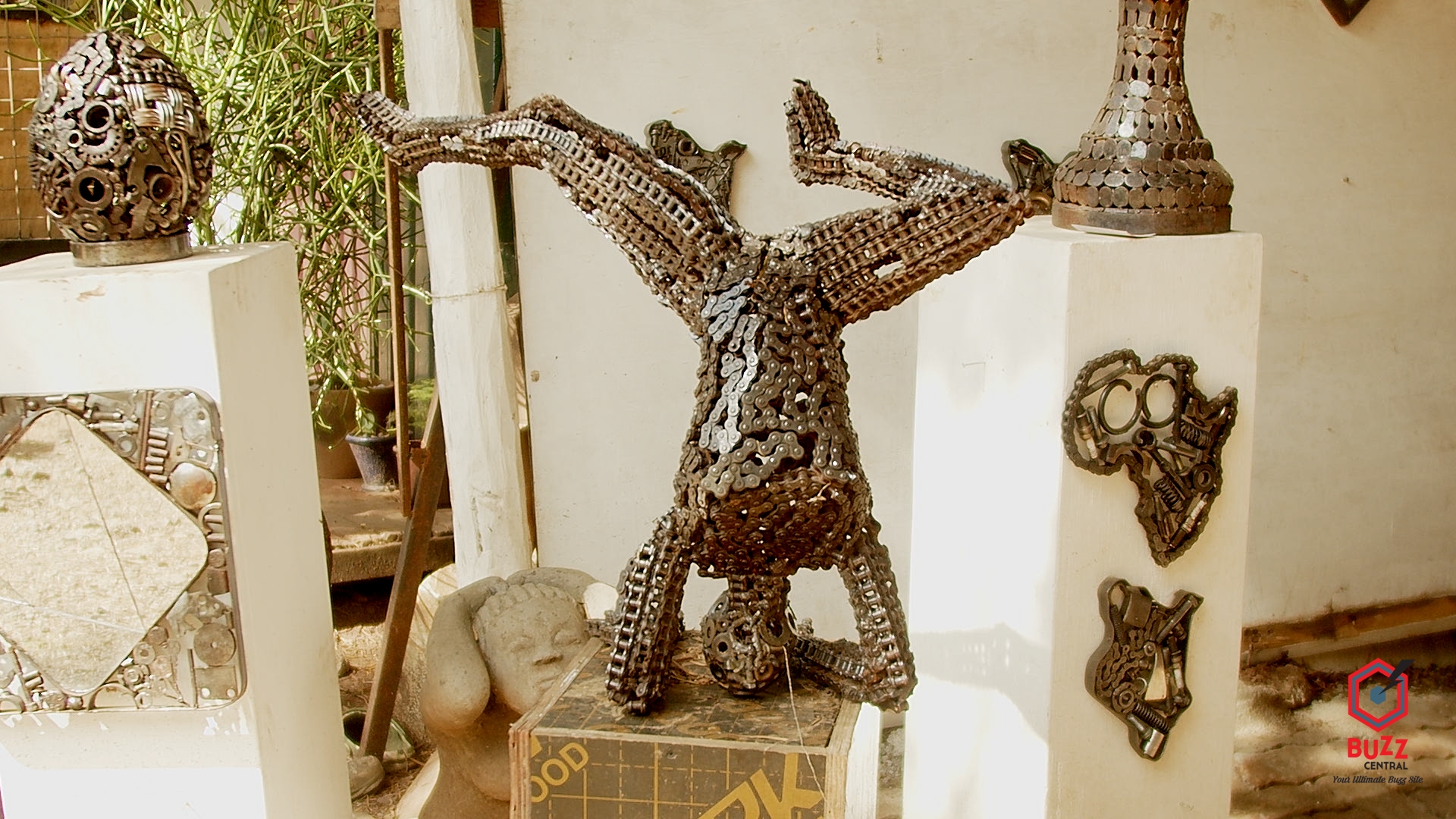
His philosophy was realised in a collaborative project in Kisumu’s Dunga Beach. The sculpture, named ‘Mbut Lolwe’ (a Luo word for tilapia), was constructed largely from plastics retrieved from Lake Victoria. “The message there was that if we want to keep eating fish, we have to stop throwing plastics around. We have to clean our environment,” Oiro states, highlighting how his art serves as a beautiful reminder of the delicate balance between community and ecosystem.
In 2019, he was commissioned to create a work for the United Nations Environment Programme (UNEP) headquarters during a major conference. The piece, titled “Beat Pollution,” was a calligraphic sculpture created in collaboration with Chilean artist Josefina Muñoz. “We did it for the #BeatPollution campaign.” The experience was a career highlight, placing his work at the centre of a global conversation. “It made us feel like world changers, like icons. Our piece was featured, and we were on top of our game. And we still are.”
Yet, the life of public art is also vulnerable to the tides of public sentiment. This was a hard lesson learned with his piece “Jalupo,” a sculpture of a fisherman and a woman in a boat, which was installed on a highway entering Kisumu. Months later, during the heated and contested 2022 election period, the piece was destroyed by protesters.
“The piece was in the wrong place at the wrong time,” Oiro reflects. “It was more about the injustices that were being felt at that point in time.” He describes the complex emotions of seeing his work destroyed: “Of course, it’s like your baby has been murdered. Like your creativity has not been regarded, regardless of the situation.”
Never one to stand still, Oiro has embraced technology to expand his vision. He has begun incorporating artificial intelligence into his design process, a move that has dramatically expanded the scale of what is possible. “AI has come in a huge way,” he says. “It has enabled me to acquire size versus density. Now I’m able to produce larger-than-life sculpture; I can even do a human form the size of a building.”
This doesn’t replace the artist’s hand, but rather empowers it. He can now take a sketch, plot it at any scale digitally, and use that as a blueprint to build monumental works.
His ambitions extend beyond his own practice. Through Shaq Art Studios, a collective embracing everything from metalwork and printmaking to graphics. He hopes to create opportunities for a new generation of Kenyan artists.
“My dream will be to come up with artwork that pushes the sizes of my materials and presents them as a new body of work,” he shares. But his vision is also for the wider creative community, “We need more spaces to show work, more spaces to work. Artists are born every day.”
His challenge to leaders is simple, “create room for creativity” to allow Kenyan art to thrive on the global stage, much like the revered artistic traditions of West Africa. For Meshack, every piece of scrap metal is not just material; it’s a fragment of a story waiting to be told forged in fire and imagination.