
Opinion Piece
HOW TUJU’S CASE WAS USED TO TARGET KENYA’S JUDICIARY AND AUCTIONEERS
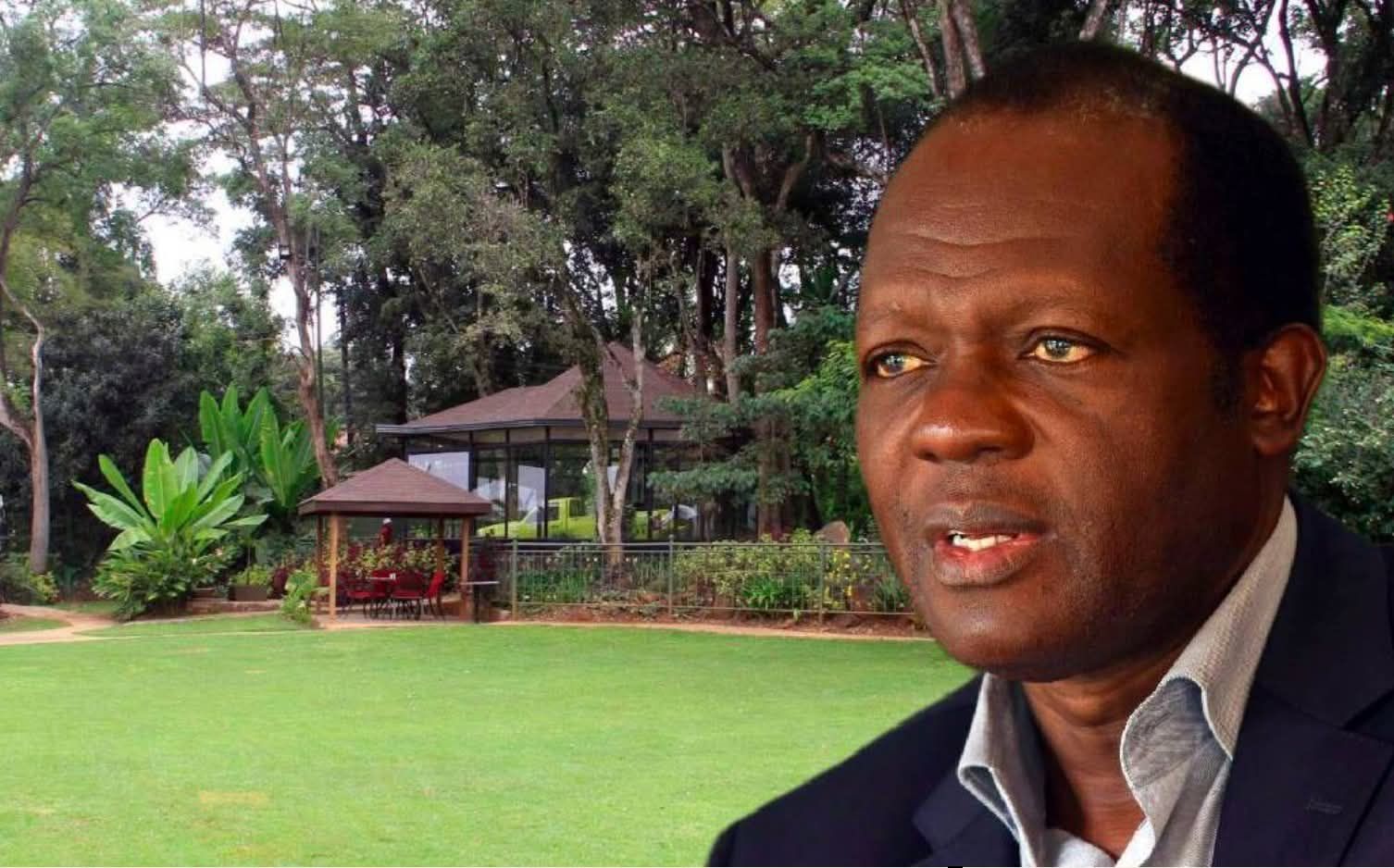
When former Cabinet Secretary Raphael Tuju revealed that a former High Court judge, a city lawyer, and two other individuals had approached him seeking KSh 10.4 million in exchange for influencing his ongoing property dispute, the immediate instinct in many quarters was to view the story as yet another chapter in a long-running legal saga.
But looked at more carefully, the episode reveals something far more troubling an alleged scheme that, if left unopposed, could have irreparably damaged public confidence in Kenya’s courts and smeared the reputations of the licensed auctioneers lawfully executing a court-sanctioned debt recovery process.
According to Tuju’s own account, the individuals who were subsequently arrested came to him claiming to act on behalf of a sitting judge. The implication was clear: money paid would translate into a favourable judicial outcome in the commercial dispute between his company, Dari Limited, and the East African Development Bank (EADB).
A case that had already wound its way from London arbitration through Kenya’s High Court, Court of Appeal, and Supreme Court.
Tuju says he reported the approach to authorities, triggering the EACC investigation that resulted in the arrests of former High Court judge Joseph Mutava, advocate Kimani Wachira, and two other suspects on March 9, 2026. The suspects were released on police cash bail of KSh 200,000 each the following day.
The matter remains under active investigation and no individual has yet been formally charged or convicted in connection with the alleged scheme. The alleged scheme is insidious precisely because of its dual purpose. On one level, it sought to interfere with the outcome of a case that courts at every level had decided against Tuju.
On another and this is the dimension most damaging to Kenya’s institutions it was structured in a way that could be used to cast a shadow of corruption over the entire judicial and enforcement process, regardless of whether money ever changed hands.
The bribery allegations thus call into question every ruling in the case. The allegations while still yet to be absolutely proven, could serve as a basis for further injunctions, appeals and public campaigns to discredit the court outcomes.
This pattern using allegations of corruption, whether real or manufactured, to delay enforcement of legitimate court orders is a known tactic in high-stakes debt disputes.
It places auctioneers in an almost impossible position. Garam Investment Auctioneers, appointed to handle the auction of Tuju’s Karen properties, have proceeded entirely on the basis of court orders upheld through multiple tiers of litigation.
Yet the atmosphere created by bribery allegations, public confrontations, and accusations against judges inevitably creates an impression, however unfair, that the entire enforcement process is tainted.
Justice Josephine Mongare was unsparing in her March 9, 2026 ruling, describing Tuju’s latest court application as a blatant abuse of court process meant to frustrate lawful recovery efforts after years of default and litigation. That clarity, however, risks being lost in the noise generated by the bribery allegations swirling around the case.
When former judges are arrested for allegedly peddling judicial influence, the public does not easily distinguish between those who corrupt the process and those who faithfully uphold it. Every honest judge, every law-abiding auctioneer, and every legitimate creditor seeking enforcement of a debt is tarnished by association.
TheEACC has itself warned repeatedly that bribery within court processes erodes public trust in the rule of law. What the Tuju case illustrates is that the erosion is not accidental it can be engineered.
When the process of questioning the integrity of courts and their enforcement officers becomes a litigation strategy, the entire system pays a price. Licensed auctioneers operating within the strict regulatory framework of the Auctioneers Act, Cap. 526, find their lawful professional conduct shadowed by suspicion they did nothing to invite.
It bears repeating that the EACC investigation is ongoing. No charges have been filed. The suspects are presumed innocent until the law determines otherwise. What is already beyond dispute, however, is that the alleged scheme if proven represents one of the most brazen attempts in recent memory to subvert a court-determined commercial outcome through the engineering of a corruption scandal.
Kenya’s anti-corruption institutions, its judiciary, and its professional auctioneers all deserve the space to do their work free from such interference. The EACC’s swift action in this matter is a signal that that space will be defended.
Disclaimer: This is an opinion article. The statements and viewpoints expressed here belong to the author and do not represent the stance of Buzz Central. Buzz Central is not responsible for the accuracy or the legal implications of the information presented.