Trending News
Nation Media New Leadership: AMWIK Demands More Women at the Decision-Making Table
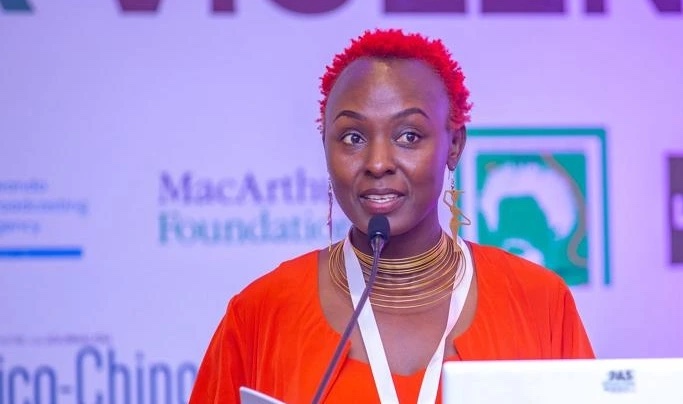
When a major media house like the Nation Media Group (NMG) announces a shake-up in its editorial leadership, the industry takes notice. But for the Association of Media Women in Kenya (AMWIK), these changes are more than just corporate restructuring, they are a litmus test for the state of gender inclusivity in Kenyan journalism.
In a statement released on September 17, 2026, AMWIK acknowledged NMG’s recent editorial leadership changes but raised a red flag: the decision-making table is still overwhelmingly male.
AMWIK commended NMG for its historic role in nurturing female talent. The association paid tribute to trailblazers like Pamela Sittoni, Wayua Muli, Catherine Gicheru, Dorothy Kweyu, and Lucy Oriang, who broke barriers to ascend to senior leadership. It also praised NMG for establishing a dedicated Gender Desk, which has driven intentional coverage of women and marginalised groups.
However, the organisation warns that these gains are at risk of being eroded. Despite NMG’s strategic efforts to realign its editorial department for the digital age, the new leadership structure reveals a stark underrepresentation of women in senior editorial roles.
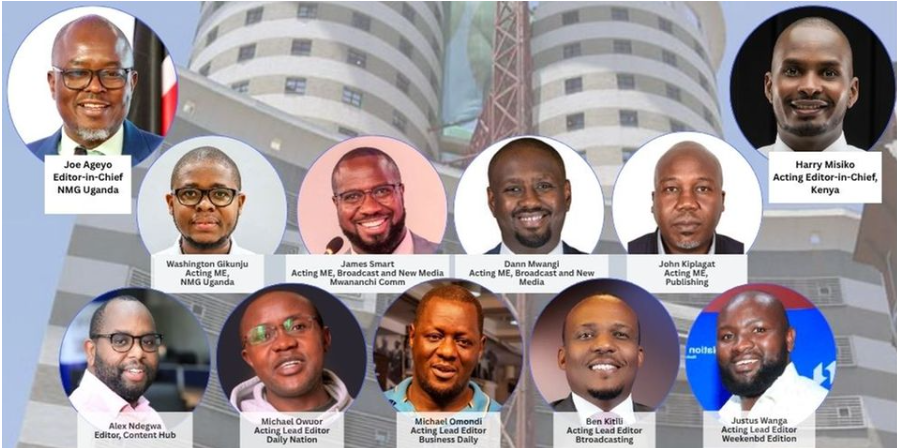
“As one of the largest and most influential media houses in Kenya and East Africa, NMG’s leadership composition sets the benchmark for the broader industry,” AMWIK stated. “The decision-making table continues to reflect a stark gender disparity that does not match the talent pool available within the profession.”
Why does this matter? According to AMWIK, who sits in senior editorial roles Managing Editors, Executive Editors, and Heads of Content determines which stories get the green light. It dictates how critical issues affecting women and families are framed, and whose voices are elevated in national conversations.
This gap is backed by hard data. AMWIK’s own State of Women in Media in Kenya(2026) report highlights this systemic challenge. Furthermore, data from the Global Media Monitoring Project (GMMP) shows that women make up only 22% to 23% of news sources and subjects in African media. Even more concerning, women are quoted as subject-matter experts just 21% of the time.
The problem isn’t a lack of qualified women entering the field. In fact, women enter the journalism profession in strong numbers. The issue is a troubling retention crisis. AMWIK points to a significant exodus of women from newsrooms around the age of 35.
As a result, representation drops dramatically with age. The statistics are sobering: Only 7.4% of women remain in the profession beyond age 45. Nationally, women occupy only 3.7% of Managing Editor roles. Women hold a mere 2.8% of media ownership positions. This is despite women comprising over 40% of the overall media workforce.
The association notes that through sustained initiatives, capacity-building programs, and executive mentorship, they have continuously invested in preparing women for high-level editorial roles. While respecting NMG’s internal management, AMWIK emphasizes that the media giant’s stature endows it with a public interest responsibility.
They are now urging NMG and media organisations across East Africa to lead from the front by building intentional leadership succession pipelines that fast-track qualified women into top decision-making positions. Addressing mid-career retention, they say, is critical to stopping the loss of experienced female talent.