

Trending News
32 Kenyan Families to Receive Ksh353 Million Each in Ethiopian Airlines Crash Compensation
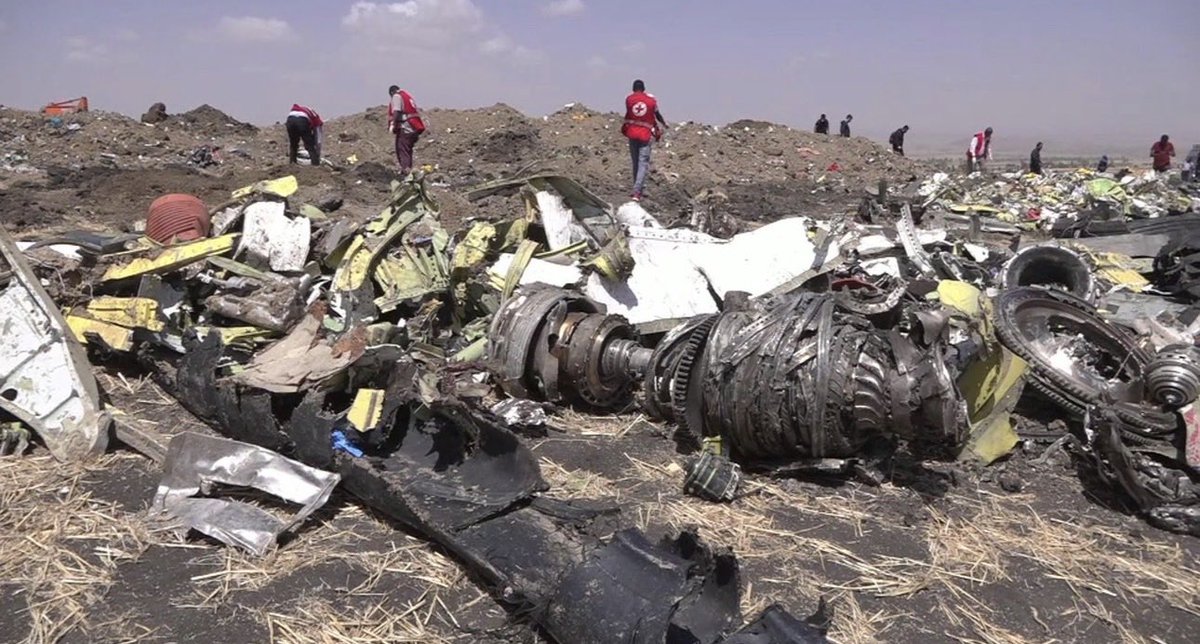
More than half a decade after the devastating Ethiopian Airlines crash that claimed 157 lives, 32 Kenyan families are finally receiving compensation from Boeing, marking one of aviation’s most painful chapters.
The payouts, estimated at Ksh353 million per household, come from a Ksh57.5 billion Victim Compensation Fund established under an agreement between Boeing and the U.S. Department of Justice in March 2025. Each affected family is set to receive approximately USD2.73 million (Ksh353.3 million).
A Chicago-based law firm representing 93 families across Africa, the Middle East, Asia, and the United States confirmed that the compensation process is now underway. The firm had earlier helped secure Ksh3.8 billion for an Irish family who lost loved ones in the same crash.
The compensation comes as part of Boeing’s effort to address the consequences of two fatal 737 MAX crashes. In addition to the victim fund, the aircraft manufacturer has committed an extra Ksh59 billion to strengthen safety measures and quality controls. The company has also agreed to appoint an independent monitor to oversee compliance.
This latest settlement adds to Boeing’s earlier financial commitments. In January 2021, the company had already agreed to pay over Ksh324 billion under a Deferred Prosecution Agreement. That package included a criminal penalty, compensation to airlines, and a separate fund for victims. With the new arrangements, the total amount tied to the crash now stands at approximately Ksh122.6 billion.
On March 10, 2019, Ethiopian Airlines Flight 302 departed Addis Ababa bound for Nairobi. Just minutes into the journey, the aircraft went down near Bishoftu, killing everyone on board.
The 157 victims came from more than 30 nations, with Kenya suffering the highest number of casualties. Investigations later revealed that a faulty sensor triggered an automated system called MCAS, which repeatedly forced the plane’s nose downward despite the pilots’ desperate attempts to regain control.
The disaster came just five months after a similar crash involving a Lion Air 737 MAX in Indonesia. The two tragedies led to a worldwide grounding of the Boeing 737 MAX fleet for nearly two years.
Since then, Boeing has implemented changes including software updates and revised pilot training programs while its certification and safety procedures have faced intense global scrutiny.